

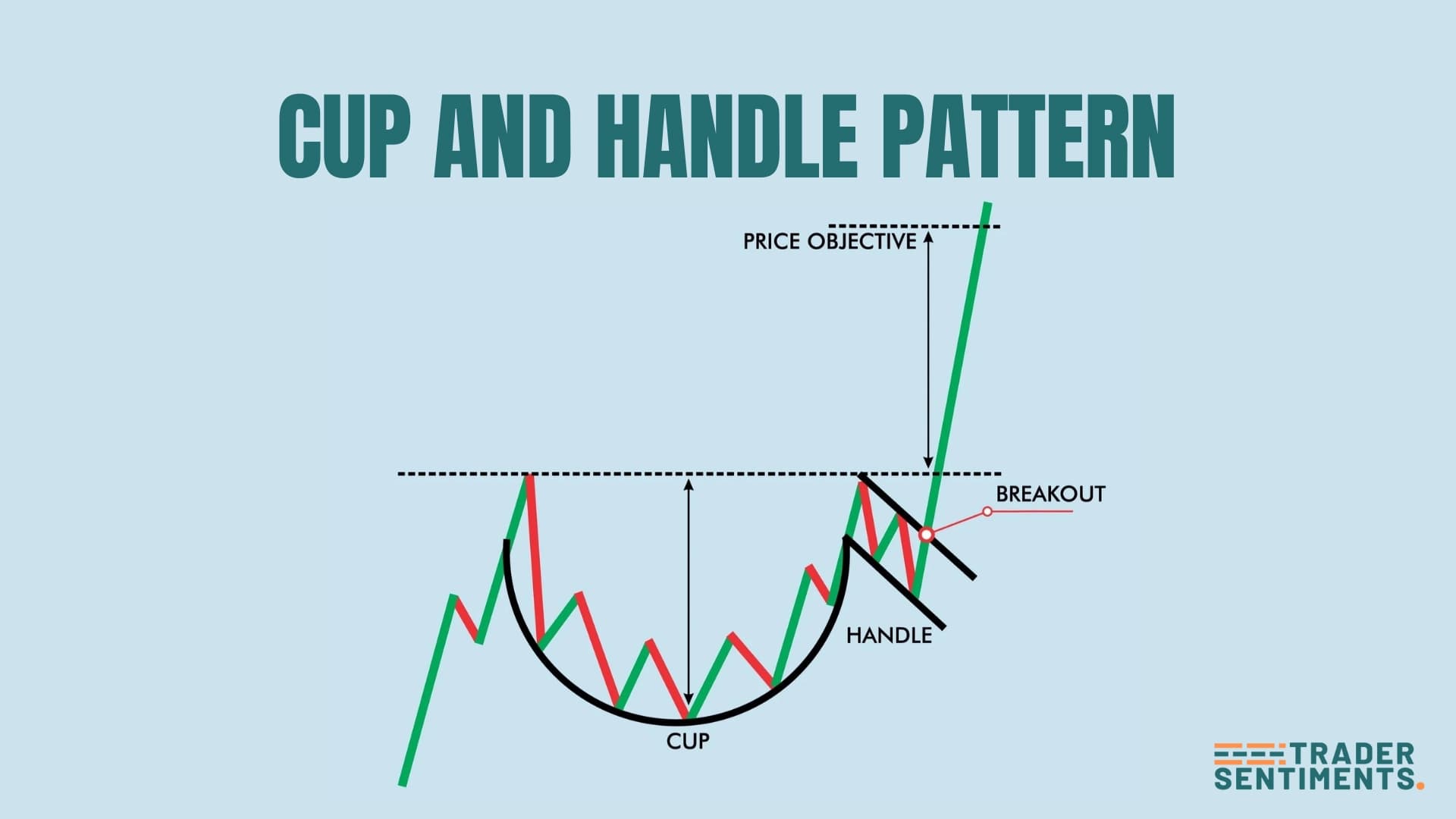
The cup and handle is a classical bullish continuation pattern first described by William O'Neil in his landmark book on growth stock investing. It forms a rounded U-shaped base (the cup) followed by a brief, smaller consolidation (the handle) before price breaks out to new highs. The pattern is widely used by both equity and Forex traders for its clear structure, well-defined entry trigger, and historically strong post-breakout performance. This guide covers the pattern structure, psychology, entry rules, risk management, and confirmation signals.
What is a Cup and Handle?
The Cup and Handle is a bullish continuation pattern that resembles a tea cup. The "cup" is a U-shaped recovery, and the "handle" is a short-term consolidation or pullback. It indicates that the market is taking a breather before resuming the trend.
Pattern structure
- U-Shape: The cup should be rounded, not V-shaped.
- Handle: A downward drift or pennant on the right side.
- Handle depth: Should not retrace more than 1/3 of the cup's depth.
- Breakout: Price breaks above the rim/handle resistance.
How to identify
Must be preceded by an upward move.
The cup base should be smooth.
Trading the pattern
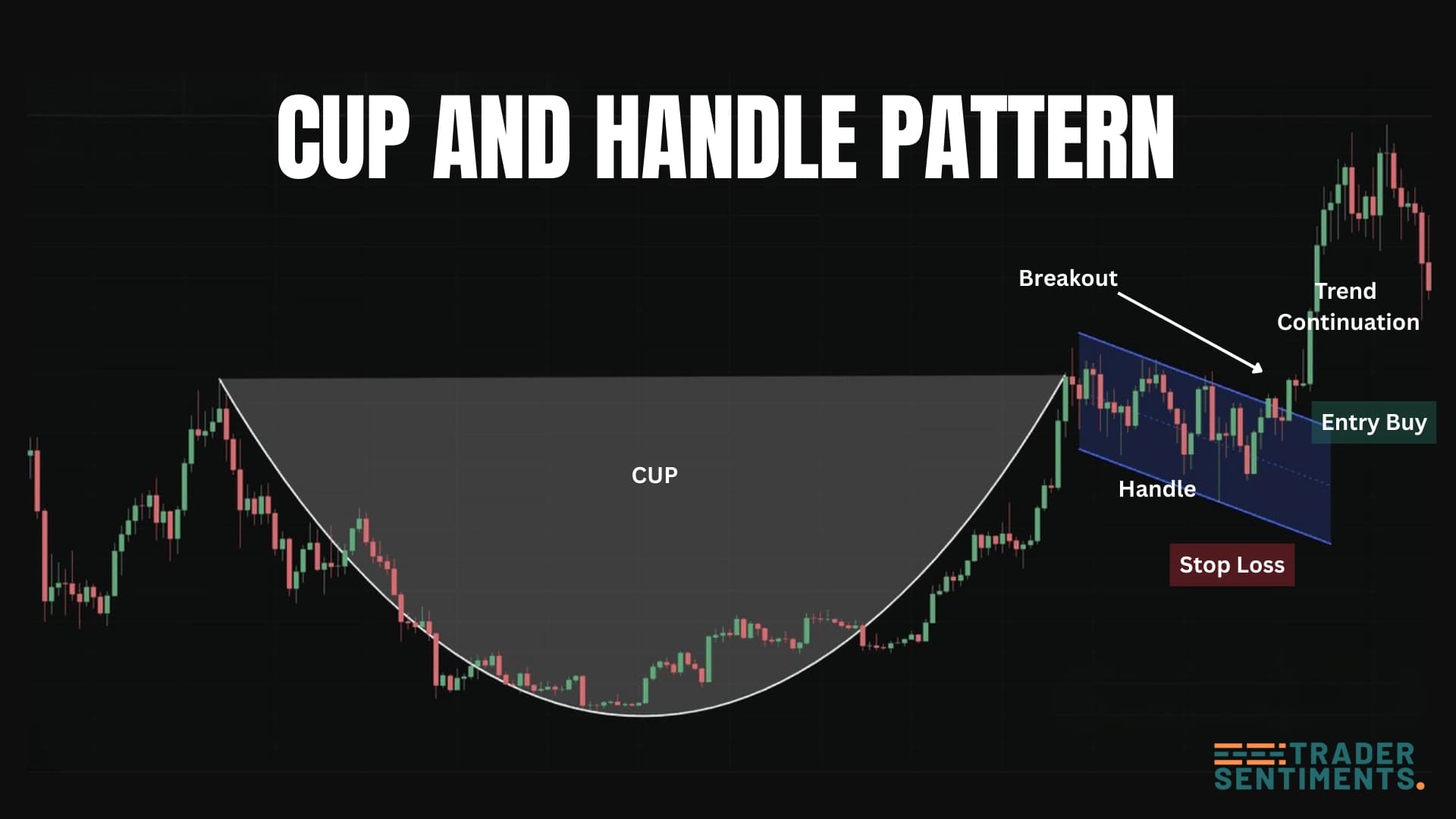
Entry rules
- Breakout: Buy when price breaks above the handle's upper trendline.
- Rim break: Buy when price breaks above the cup's rim (resistance).
Stop-loss placement
Below the bottom of the handle.
Below the handle trendline.
Profit targets
Measure depth from rim to bottom. Project upward from breakout.
Common mistakes
V-shaped recoveries are not cups; they are too sharp.
If the handle drops too low, the pattern may fail.