

Day trading is a trading style where positions are opened and closed within the same day. This guide explains how day trading works, common timeframes, popular setups, and risk rules for beginners.
Day trading explained
Day trading focuses on intraday price movement. Traders often define context using higher timeframes (H1/H4), then execute on lower timeframes (M15/M5) with clear invalidation stops and planned targets. Because decisions happen faster, consistent risk rules and discipline matter more than having many indicators.
How day trading works
A simple day trading workflow is: identify market context, mark key levels, wait for a setup during active hours, then execute with tight risk control. Most day traders aim for high-quality setups rather than constant trading.
- Check direction and key levels (H1/H4)
- Choose a session (London / New York / overlap)
- Wait for a setup at a key level
- Enter with confirmation and a clear stop-loss
- Manage the trade and stop for the day if limits hit
Highlights
- Day trading closes trades within the same day (no overnight exposure).
- Intraday execution needs strict risk rules and fast discipline.
- Liquid markets and active sessions generally provide cleaner movement.
- Daily loss limits help prevent emotional revenge trading.
Choosing a trading session
Day traders often focus on periods where liquidity and volatility increase. For FX and gold, the London session, New York session, and the London–New York overlap commonly offer more movement compared to quieter hours. Choose a session you can trade consistently and avoid forcing trades outside your plan.

Technical analysis for day trading
Intraday technical analysis is about clarity and speed. Many day traders mark key levels (previous day high/low, support/resistance), watch structure, and use simple momentum confirmation. A clean chart reduces hesitation and helps you follow your plan.
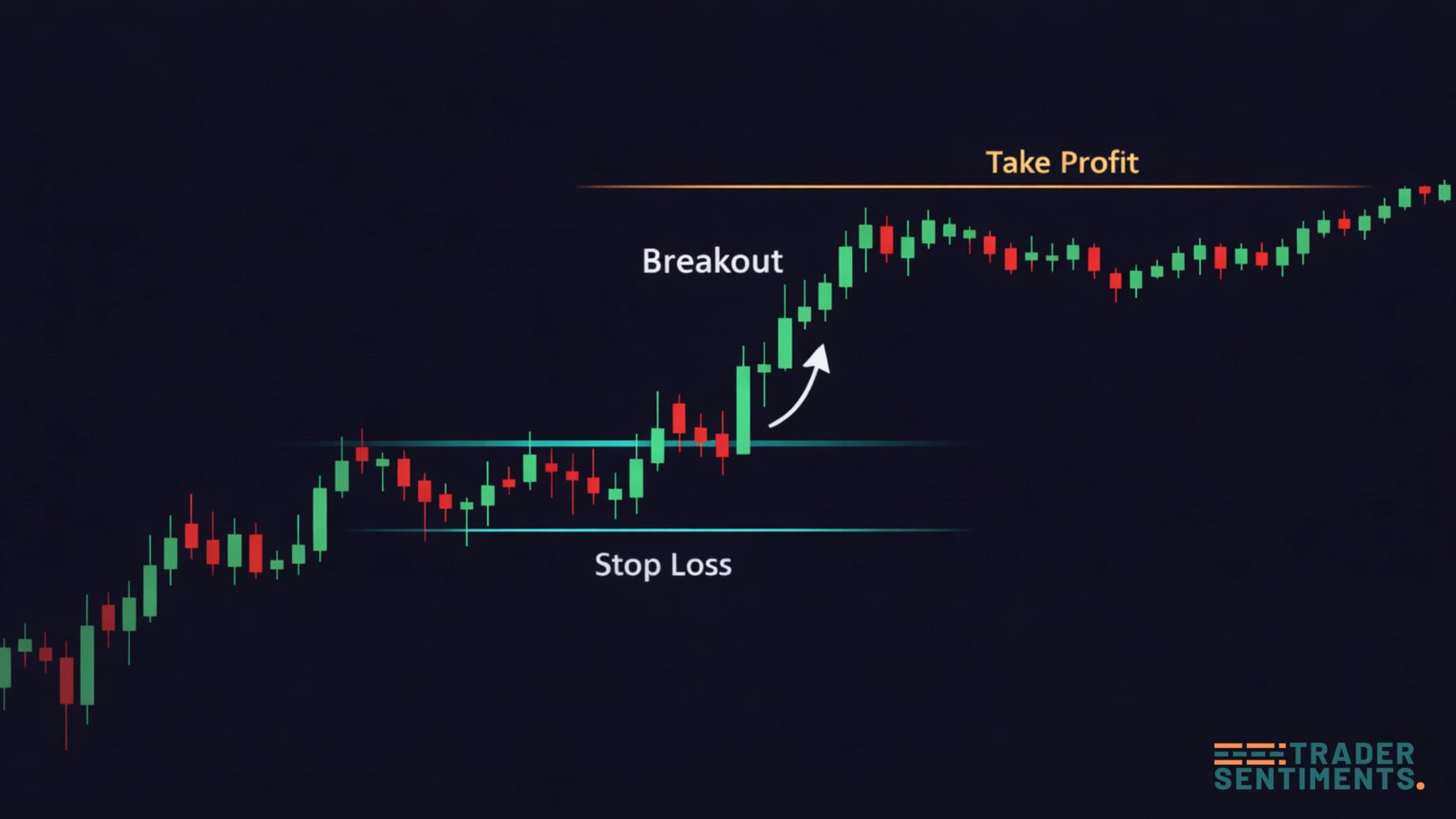
Mark key levels first. Enter only when price reacts and confirms direction.
Use a clear invalidation stop and a target based on structure or risk-to-reward.
Building a day trading strategy
- Choose a market + session you can trade consistently.
- Define your bias using H1/H4 (trend + key levels).
- Define one setup (breakout, pullback, or mean reversion).
- Define entry trigger (e.g., candle close, structure break, confirmation).
- Set stop-loss at invalidation, target based on RR/levels.
- Set rules: max trades/day, daily loss limit, no revenge trades.
- Risk 0.25%–1% per trade (fixed).
- Max 1–3 trades per day (quality over quantity).
- Stop trading after a daily loss limit (e.g., -2R).
- Avoid trading when tired, rushed, or emotional.
Day trading strategies and techniques
Wait for a clean break of a key level, then enter on retest with defined invalidation. Avoid chasing candles after the move.
Trade with the intraday trend by entering after a controlled pullback into a key zone, then use structure-based stops.
In ranges, fade extremes only when you have clear invalidation and disciplined targets. Don’t average down without rules.
Is day trading worth it?
Day trading can be worth it for people who can follow rules consistently, manage risk, and treat it like a skill that takes time to develop. It may not suit everyone because intraday markets move quickly and mistakes can compound through overtrading.
- You can trade consistently during a session.
- You like structured rules and journaling.
- You keep risk small and avoid revenge trading.
- You prefer slower decisions and fewer trades.
- You struggle with impulse entries.
- You can’t monitor trades during active hours.
What instruments do day traders typically trade?
Many day traders focus on major FX pairs, gold, major indices, and high-volume stocks. Liquidity matters because spreads and execution can strongly affect intraday results. Trade instruments you understand and avoid overtrading multiple markets at once.