

Swing trading is a medium-term trading style that aims to capture price moves over days to weeks. This guide explains how swing trading works, common timeframes, practical setups, and how traders manage risk in forex and CFDs.
What is swing trading?
Swing trading is a medium-term trading approach where positions are held for several days to a few weeks to capture a “swing” in price. Instead of reacting to short-term noise, swing traders look for clean market structure, momentum, and well-defined risk points.
How swing trading works
Most swing traders start by defining the market context on higher timeframes (D1/H4), then wait for price to pull back into a key area (support/resistance, moving average, or a supply/demand zone). Entries are taken with confirmation, stops are placed beyond invalidation, and targets are planned using structure or risk-to-reward rules.
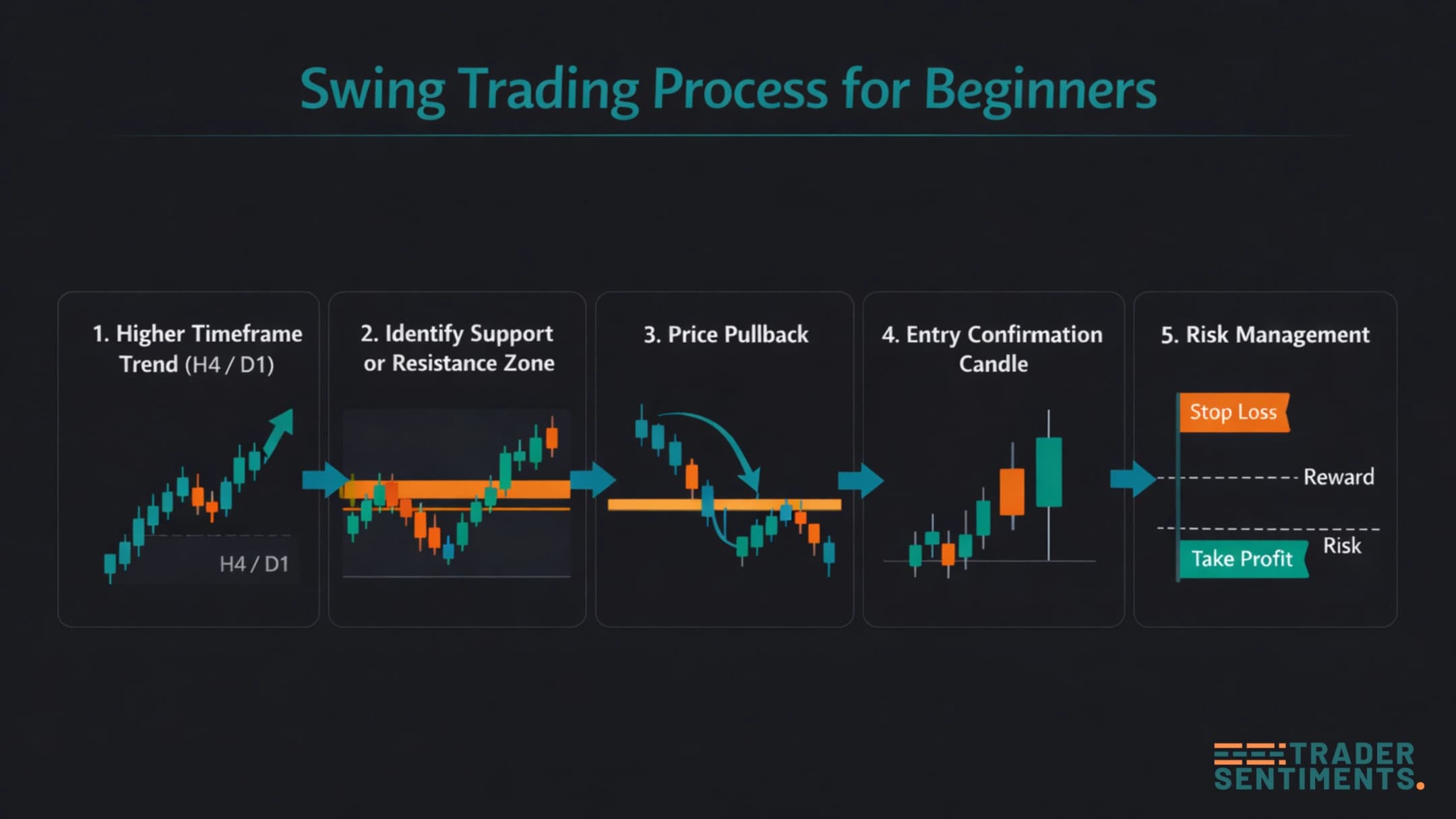
- Identify direction (trend or range) on D1/H4
- Mark key zones (support/resistance)
- Wait for a pullback + entry trigger
- Place stop at invalidation
- Set targets + manage risk
Swing trading vs day trading
Swing trading and day trading both aim to profit from price movement, but they differ mainly in holding time, frequency, and how much “screen time” you need.
Highlights
- Swing trading holds positions for days or weeks to capture expected market swings.
- Traders use fundamental + technical analysis to identify potential entries.
- Risk management matters: position sizing, stops, and avoiding major news can reduce blowups.
- Timeframe selection (H1–D1) is common, but strategy should match your lifestyle.
Fundamental analysis for swing trading
Fundamentals help you understand why an asset might trend or mean-revert. For FX, focus on interest rates, inflation, employment data, and central bank guidance. For indices/stocks, earnings, guidance, sector rotation, and macro risk sentiment matter.
Technical analysis for swing trading
Technical analysis helps define entries, exits, and risk. Popular swing concepts include support/resistance, trend structure (HH/HL), moving averages, RSI/MACD confirmation, and ATR-based stops.
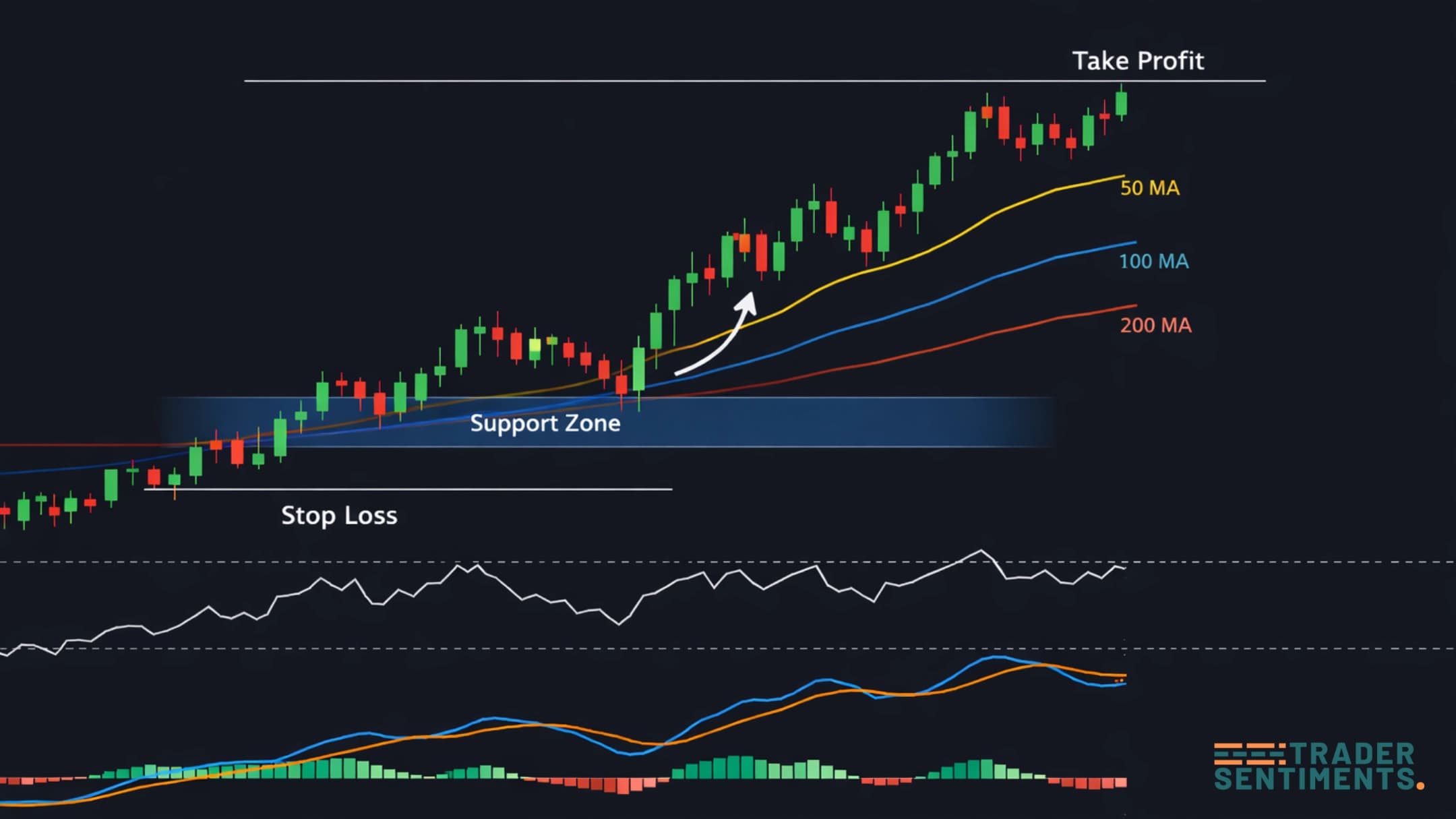
Identify direction on D1/H4, enter on pullbacks using structure + confirmation.
Trade extremes with tight invalidation, target mid-range or opposite boundary.
Building a swing trading strategy
- Pick markets + timeframe (e.g., majors on H4/D1).
- Define entry trigger (structure + indicator confirmation).
- Define invalidation (stop) + target logic (RR, levels, ATR).
- Set risk per trade (e.g., 0.5%–1%).
- Backtest → forward test → journal improvements.
Swing trading strategies and techniques
Trade with the trend after a controlled pullback into a key zone (MA / S&R / OB).
Wait for a clean break, then enter on retest with reduced false breakout risk.
Best for ranges: fade extremes with a tight invalidation and partial scaling.
What instruments do swing traders typically trade?
Most swing traders focus on liquid markets: major FX pairs, gold, indices, and large-cap equities. Liquidity matters for tighter spreads and more reliable execution during volatility.