


Hedging in trading is a risk management method used to reduce exposure when markets are uncertain. This guide explains what hedging is, common hedging strategies in forex and CFDs, when hedging can help, and how to manage hedges without turning them into uncontrolled losses.
Hedging in trading means opening a second position to reduce the risk of your main position. If price moves against you, the hedge is designed to offset some or all of the loss. Traders use hedging strategies in forex and CFDs to control drawdowns, protect open profit, and reduce exposure during major events.
The main purpose of hedging is not to “win more.” It is to reduce account volatility, protect open profit, or buy time when the market becomes uncertain. A good hedge has a clear reason, a clear exit plan, and a clear cost limit.
The biggest mistake traders make is hedging without a plan—then the hedge becomes another trade that needs management. In that case, you often end up with two positions working against you: a losing main position and a hedge that you don’t know when to close.
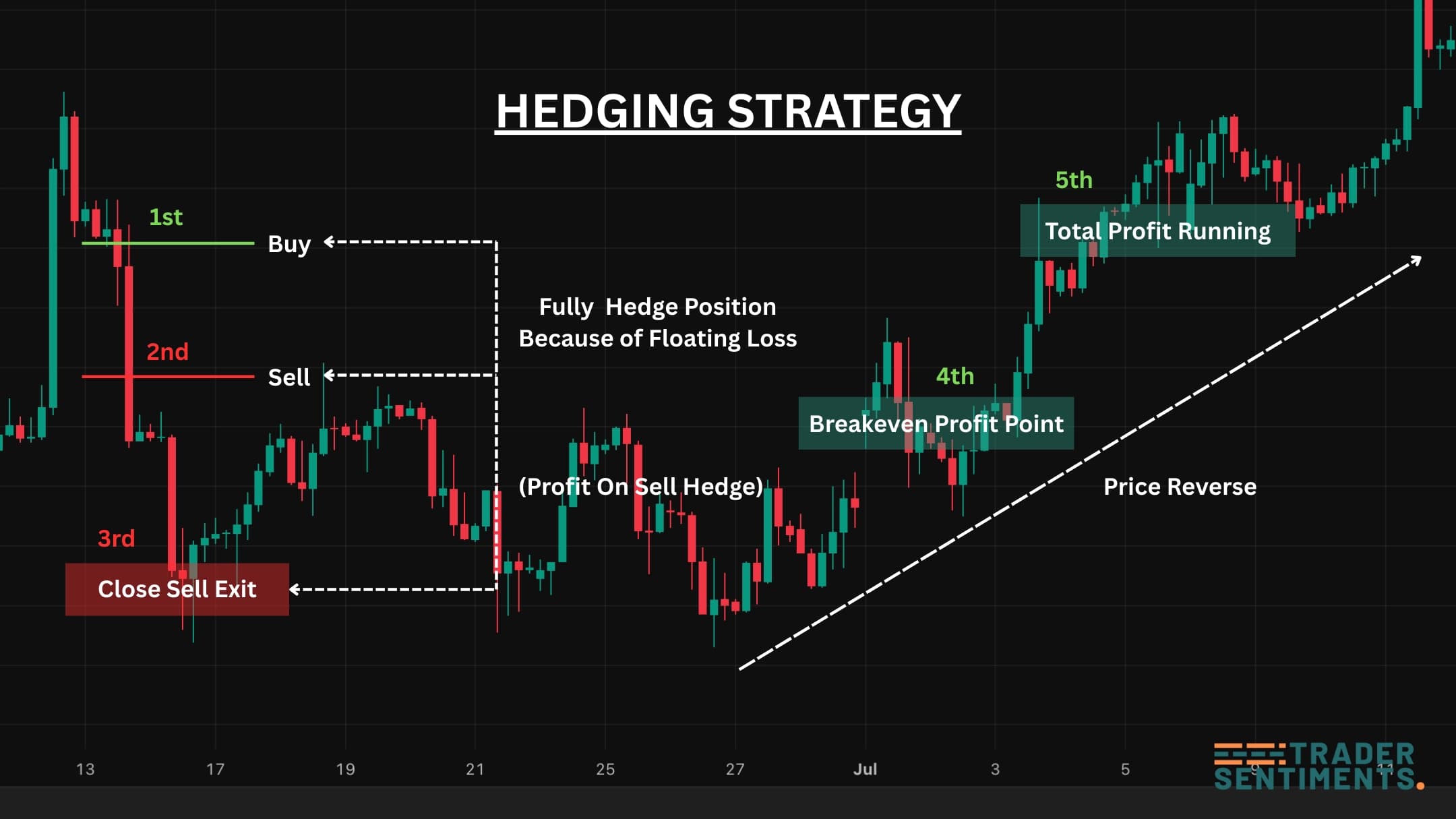
Hedging explained
Hedging is the act of reducing risk by opening an offsetting position. That offset can be created in different ways: (1) opening the opposite direction on the same instrument, (2) hedging with a correlated instrument, or (3) using partial hedges to reduce exposure without fully removing it.
In hedging in forex trading, traders often hedge the same pair (direct hedge) or use correlated pairs to reduce a key driver like USD exposure—especially when volatility is expected.
Think of hedging as a “risk control tool.” When used correctly, it can smooth equity swings. When used incorrectly, it can increase costs and complexity without improving outcomes.
- Hedging is: reducing exposure during uncertainty.
- Hedging is not: a replacement for a stop loss or a plan.
- Hedging is: useful when you have a thesis but want protection.
- Hedging is not: “locking forever” and hoping the market fixes it.
Why traders use hedging
Traders hedge for practical reasons—usually to control downside while staying in the market. Common situations include upcoming news risk, holding a long-term position through volatility, or protecting open profit after a strong trend move.
- Event risk protection: reduce exposure around major announcements.
- Profit protection: hedge to protect gains while keeping a core position.
- Uncertainty management: hedge when bias is unclear but you don’t want to exit fully.
- Portfolio control: reduce correlated exposure (example: too much USD risk).
- Volatility is expected but direction is uncertain.
- You want to hold a position but reduce drawdown risk.
- You have a core thesis but the timing is not clean.
- You hedge without defining when to exit the hedge.
- You keep adding hedges repeatedly (complex exposure).
- Costs (swap/spread) are ignored for long holds.
Common hedging methods
There are several ways to hedge. The best method depends on your goal: freeze risk, reduce risk, protect open profit, or balance portfolio exposure.
Example: you are long EURUSD and open a short EURUSD to reduce exposure. This can “freeze” floating P&L, but costs still apply and you must plan how you will unlock the hedge.
Example: long 1.0 lot, hedge short 0.3–0.6 lots. This reduces drawdown while keeping some upside if the trend resumes. Partial hedges are often simpler than full locks.
Example: if USD strength is your main risk, you can reduce USD exposure by hedging with another USD pair or by reducing correlated positions. Correlation hedges are less “perfect” but can be useful for portfolio control.
Some traders hedge only for a short window, like before a major event, then remove the hedge after volatility clears. This is usually cleaner than holding hedges indefinitely.
Risk and cost considerations
Hedging has “hidden costs.” Even when the hedge reduces directional risk, you often pay extra spread and commissions, and you may pay swaps (overnight financing). Over time, these costs can become significant—especially for full hedges held for weeks.
- Spread + commission on both legs.
- Swap/rollover while holding hedged positions.
- Margin requirements for hedged exposure.
- Execution/slippage during volatile moments.
- Hedging too late (after large loss already happened).
- Not planning how to remove the hedge.
- Stacking multiple hedges and losing clarity.
- Ignoring costs, then wondering why equity leaks.
A simple rule: if you cannot clearly explain why the hedge exists and when it ends, you should not hedge. Complexity is usually the real risk.
Building a hedging plan
A good hedging plan is written like a small system: when to hedge, how much to hedge, and how to remove the hedge. This prevents the hedge from becoming emotional.
- Define the purpose: protect profit, reduce drawdown risk, or manage event volatility.
- Choose hedge type: direct hedge, partial hedge, or correlation hedge.
- Define size: decide the hedge ratio (example: 30%–60% exposure reduction).
- Define removal rules: remove on condition (breakout confirmation, volatility drop, or time window).
- Limit cost: if costs exceed a defined amount, reduce/close the hedge.
- Core position: hold a higher-timeframe trade idea.
- Trigger: hedge before high-impact news or during uncertainty.
- Hedge size: partial hedge (40% of exposure).
- Exit hedge: remove after direction confirms or event passes.
- Rule: stop hedging if costs exceed the planned protection value.
Hedging is powerful when it is simple. Keep the plan clean, track costs, and avoid creating a hedge that you can’t confidently manage.